
Luxury perfume buyers in Deira Dubai do not judge a scent by one note alone. They notice how the opening smells, how the heart develops, and how long the base stays on skin, fabric, or in a room. That is why the best-smelling essential oil blends used in luxury perfumes are usually built with balance: bright citrus top notes, rich floral middle notes, and deep base notes such as oud, amber, musk, sandalwood, patchouli, vanilla, vetiver, and leather. For perfume shops, resellers, private label brands, and home fragrance sellers, this matters because a weak blend can smell pleasant for five minutes but fail in real use. A strong blend should offer scent quality, long-lasting scent, good projection, stable dry-down, and a clear identity that buyers can remember.
This guide explains which essential oil blends smell expensive, how luxury perfume oils are structured, and how these blends can work for personal perfumes, attar oils, diffuser oils, home fragrance products, candles, body oils, and roll-on perfumes.
Quick Answer: What Essential Oil Blends Smell Most Luxurious?
The best luxury-style essential oil blends usually combine a bright opening, a rich heart, and a long-lasting base. Blends such as oud + rose + saffron, sandalwood + vanilla + amber, jasmine + musk + patchouli, and bergamot + neroli + cedarwood smell premium because they create depth instead of staying flat. In Dubai and Deira, buyers often prefer warm, deep, and rich scent profiles, especially Arabian perfume oils with oud, amber, musk, rose, sandalwood, saffron, frankincense, and patchouli.
| Luxury Blend | Scent Profile | Best Use |
| Oud + Rose + Saffron | Rich, floral, spicy, Arabian | Attar oils, luxury perfume oils |
| Sandalwood + Vanilla + Amber | Creamy, warm, smooth | Unisex perfume oils, roll-on perfumes |
| Jasmine + Musk + Patchouli | Floral, deep, sensual | Feminine luxury perfumes |
| Bergamot + Neroli + Cedarwood | Fresh, clean, woody | Daily wear perfume oils |
| Frankincense + Myrrh + Oud | Resinous, smoky, intense | Niche Arabian perfumes |
| Rose + Musk + Amber | Soft, powdery, warm | Romantic perfume oils |
| Grapefruit + Ginger + Vetiver | Bright, spicy, earthy | Men’s perfume oils |
| Cardamom + Saffron + Leather | Spicy, bold, premium | Luxury masculine blends |
Best luxury-style blends at a glance
A luxury-style blend should not smell random. Oud and rose create a rich Arabian character. Sandalwood and vanilla create warmth and creaminess. Jasmine and musk create a polished floral scent. Bergamot and neroli create freshness, while cedarwood and vetiver add dry woody structure. These combinations are common because they solve a real perfume problem: light notes smell attractive at first but fade quickly, while deeper notes can feel heavy if they are not balanced. A good blend gives both first impact and long-lasting scent.
Essential Oils, Perfume Oils, and Fragrance Oils: What Is the Difference?
Essential oils, perfume oils, and fragrance oils are related, but they are not the same. This difference matters because many buyers search for “essential oils for perfume,” but commercial perfume businesses often need more than raw essential oils. They need stable blends that perform well in roll-on perfumes, attar oils, candles, reed diffusers, room sprays, skincare, hair care, beard oils, body lotions, soaps, and home fragrance products.
Essential oils come from plant extraction methods such as steam distillation, cold pressing, solvent extraction, distillation, and pressing. Perfume oils are scent blends made for personal fragrance use. Fragrance oils may include natural notes, synthetic notes, aroma compounds, and prepared accords that improve consistency, scent throw, and product performance. For B2B fragrance buyers, this difference affects price, safety, stability, and repeat product quality.
Essential oils are plant-derived aromatic extracts
Essential oils are concentrated compounds extracted from flowers, leaves, peels, woods, roots, herbs, seeds, and resins. Examples include lavender oil, bergamot oil, jasmine oil, sandalwood oil, peppermint oil, lemon oil, orange oil, cedar oil, patchouli oil, rose oil, eucalyptus oil, tea tree oil, rosemary oil, clary sage, chamomile, geranium, vetiver, and frankincense. These oils can be used in aromatherapy, cosmetics, home fragrances, and natural perfume making.
The main strength of essential oils is their botanical scent. The weakness is that they can vary by crop, origin, extraction method, and storage condition. Some also need careful dilution because they may cause skin sensitivity. This is why serious sellers should never treat essential oils as casual ingredients. An allergy test, dilution guidance, clean dropper use, shaded containers, and storage in a cool, dry place are all important.
Perfume oils are finished or semi-finished scent blends
Perfume oils are made for personal fragrance use. They may include essential oils, fragrance oils, carrier oil, aromatic compounds, base oils, heart oils, and fixative materials. A perfume oil can be natural, mixed, or fully composed from fragrance accords. In Deira Dubai, perfume oils are popular because they are concentrated, easy to apply, and often longer-lasting than light sprays.
A good perfume oil should feel smooth on the skin, carry a clear scent identity, and hold its fragrance for several hours. Common directions include oud perfume oil, rose musk oil, amber musk oil, sandalwood vanilla oil, jasmine patchouli oil, and saffron leather oil. These blends can be used for personal perfume, roll-on perfume, body oils, and private label fragrance products.
Fragrance oils can offer better consistency for commercial products
Fragrance oils are created to deliver a specific scent profile with repeatable performance. They may include synthetic fragrance oils, natural fragrance materials, aroma compounds, essential oil components, and prepared perfume bases. This is why they are widely used in candles, soaps, diffusers, room sprays, laundry scenting, cleaning products, textiles, skincare, hair care, and DIY crafting.
For commercial sellers, fragrance oils can be more practical than pure essential oils because they offer better consistency, broader scent options, and stronger cost control. For example, a seller trying to create a scent similar in style to Tom Ford Oud Wood, Coco Chanel, Edition Hotel, or The One Hotel may need a developed fragrance accord, not only raw essential oils. The goal should not be copying famous perfumes directly. The goal should be building a legal, original scent direction inspired by luxury fragrance families.
How Luxury Perfumes Are Built
Luxury perfumes are built in layers. The first layer creates impact, the second layer gives character, and the final layer gives lasting power. This is usually described as top notes, middle notes, and base notes. A balanced fragrance does not depend on one part only. It uses fragrance proportions to control scent intensity, oil viscosity, fragrance maturity, and the final olfactory experience.
In perfume blending, the structure must match the product format. A personal perfume needs skin comfort and a smooth dry-down. A diffuser oil needs a strong scent throw. A waterless diffuser fragrance oil needs clean diffusion without harshness. A candle fragrance needs heat performance. A roll-on perfume needs stable contact with skin and carrier oil. This is why testing matters before bulk production.
Top notes create the first impression
Top notes are the first scents a buyer notices. They are usually fresh, bright, and quick to evaporate. Common top notes include bergamot, lemon, mandarin, grapefruit, lime, sweet orange, neroli, petitgrain, peppermint, spearmint, citronella, lemongrass, ozone, and green aromas. These notes make a perfume feel clean, energetic, and attractive at first spray or first application.
The weakness of top notes is that they do not last long alone. A perfume built mostly on citrus notes may smell refreshing at first but fade quickly. That is why luxury blends often use citrus notes as an opening, then support them with floral, spicy, woody, musky, or amber notes. For example, bergamot + neroli + cedarwood feels clean and premium because cedarwood gives the citrus opening a dry woody base.
Heart notes shape the main scent character
Heart notes, also called middle notes, form the main scent body. These notes appear after the opening settles and often define the fragrance family. Common heart oils include rose, jasmine, lavender, geranium, rose geranium, palmarosa, ylang ylang, neroli, tuberose, orange blossom, freesia, peony, mimosa, clary sage, cardamom, coriander, black pepper, and Indian jasmine.
Heart notes are where the perfume becomes recognizable. Rose and jasmine create romantic floral scent. Lavender and geranium create a clean, floral, herbal scent. Cardamom, coriander, pepper, and saffron create a warm spicy scent. In Arabian perfume oils, the heart often carries rich florals and spices before settling into oud, amber, musk, sandalwood, or patchouli.
Base notes give depth and staying power
Base notes are the foundation of a long-lasting scent. These notes stay the longest and shape the final dry-down. Common base oils and base note materials include oud, sandalwood, patchouli, vetiver, amber, musk, vanilla, tonka bean, leather, cedarwood, frankincense, myrrh, rosewood, green moss, Virginia cedar, blonde woods, and Madagascar vanilla.
Base notes are crucial for luxury perfume oils because they prevent the scent from disappearing too quickly. Sandalwood gives creamy woody depth. Vetiver gives earthy dryness. Patchouli adds dark richness. Amber gives warmth. Musk gives softness. Oud gives strength and Middle Eastern luxury. Without base notes, a blend may smell good for a short time but fail as a premium personal fragrance.
Fixatives help luxury perfume oils last longer
Fixatives slow down the evaporation of lighter notes and help the scent stay longer. In traditional perfumery, materials such as ambergris, musk, resins, balsams, sandalwood, patchouli, vetiver, frankincense, myrrh, and labdanum-style notes have been used to add depth and hold. Some historic fixatives came from rare animal-derived sources such as ambergris from sperm whale or musk from musk deer animal secretions, but modern fragrance work often uses safer, legal, synthetic, or plant-based alternatives.
For commercial perfume sellers, the practical lesson is simple: a luxury-style perfume oil needs a strong base. It does not need unsafe or unethical materials. Modern perfumery can use natural notes, synthetic notes, resinous essential oils, and stable fragrance oils to create depth, projection, and long-lasting scent while staying suitable for responsible product development.
Best Smelling Essential Oil Blends Used in Luxury Perfumes
The best-smelling essential oil blends used in luxury perfumes usually combine familiar premium notes with a clear scent direction. A good blend is not just “nice.” It should tell the buyer what kind of fragrance it is: Arabian, fresh, floral, woody, spicy, creamy, smoky, clean, or sensual.
Oud, Rose, and Saffron
Oud, rose, and saffron is one of the strongest luxury perfume blend directions for Dubai buyers. Oud gives the blend depth and power, rose adds floral richness, and saffron brings a warm, spicy edge. This combination works especially well in Arabian perfume oils, attar oils, roll-on perfumes, and high-end gifting products. The scent profile feels rich, warm, floral, and bold, which makes it suitable for evening wear, traditional perfume shops, and customers who prefer long-lasting perfume oils.
For commercial use, this blend can be softened with amber or musk if the oud feels too strong. A seller can also add a small touch of sandalwood to make the dry-down smoother. This direction is ideal for perfume oil businesses that want a premium Middle Eastern scent profile without making the fragrance smell too harsh or heavy.
Sandalwood, Vanilla, and Amber
Sandalwood, vanilla, and amber create a creamy, warm, smooth blend that works well for unisex perfume oils. Sandalwood gives a soft woody base, vanilla adds sweetness, and amber gives warmth and depth. This blend is easier to wear than heavy oud blends, so it can work well for daily perfume oils, body oils, roll-on perfume, and private label products aimed at both men and women.
This blend also works for home fragrance products because it feels warm and comforting without being sharp. In diffuser oils, candles, and room sprays, sandalwood and amber can support a long-lasting scent, while vanilla gives a soft, sweet finish. For Deira buyers, this is a strong option if the goal is a premium scent that feels modern, smooth, and easy to sell.
Jasmine, Musk, and Patchouli
Jasmine, musk, and patchouli create a floral, deep, and sensual perfume profile. Jasmine gives the blend a rich white floral heart, musk softens the scent and makes it feel clean on skin, while patchouli adds earthy depth. This type of blend is useful for feminine luxury perfumes, oil-based personal perfumes, body oils, and evening scents.
The key here is control. Too much patchouli can make the blend feel dark or muddy. Too much jasmine can become heavy. Musk helps smooth the blend and makes it more wearable. For perfume sellers, this blend can be positioned as a rich floral perfume oil for customers who want something stronger than a simple rose or lavender fragrance.
Bergamot, Neroli, and Cedarwood
Bergamot, neroli, and cedarwood is a fresh, clean, woody blend that suits modern daily wear. Bergamot gives a bright citrus scent, neroli adds a refined floral-citrus heart, and cedarwood brings dry woody structure. This blend is useful for customers who want a luxury perfume that feels clean, professional, and not too sweet.
This direction can work well in perfume oils, reed diffusers, room sprays, waterless diffuser fragrance oil, and premium home scent products. It is also a good bridge between Western-style fresh perfumes and Dubai’s preference for deeper base notes. Adding light musk or amber can make the blend last longer without making it heavy.
Frankincense, Myrrh, and Oud
Frankincense, myrrh, and oud create a smoky, resinous, intense scent profile. It feels deep, spiritual, and niche. This blend is best for Arabian attar oils, winter scents, luxury diffuser oils, and perfume oils aimed at customers who prefer bold fragrance. Frankincense and myrrh bring resinous warmth, while oud adds depth and strength.
This blend should be used carefully because it can become too heavy if the base notes dominate. A small amount of rose, saffron, bergamot, or amber can round it out. For Bintammam buyers, this is a strong direction for niche perfume brands, premium home fragrance, and customers who want a scent that feels different from mass-market perfumes.
Rose, Musk, and Amber
Rose, musk, and amber are a soft, warm, romantic floral blend. Rose gives the main floral identity, musk adds a clean, skin-like softness, and amber brings warmth. This blend is easier to wear than oud rose and can appeal to customers who want a floral perfume oil that feels elegant but not too strong.
This blend works well for roll-on perfumes, body oils, personal fragrance, and feminine perfume lines. For Deira shops, it can be a strong option for daily wear and gifting because it has broad appeal. A touch of vanilla, sandalwood, or white florals can make it smoother, while a touch of saffron can make it more premium.
Lavender, Tonka, and Sandalwood
Lavender, tonka, and sandalwood create a soft aromatic blend with creamy depth. Lavender brings a clean, herbal, floral scent, tonka bean adds sweet warmth, and sandalwood gives a smooth woody base. This blend works well for unisex perfume oils, relaxing body oils, beard oils, and premium personal fragrance products.
Unlike basic lavender blends used only for aromatherapy, this direction feels more polished because tonka and sandalwood give it a perfume-like base. It can also work in home fragrance products where buyers want a calm, warm scent rather than a sharp herbal smell.
Grapefruit, Ginger, and Vetiver
Grapefruit, ginger, and vetiver create a bright, spicy, earthy scent profile. Grapefruit gives a fresh citrus opening, ginger adds energy and spice, while vetiver gives dry earthy depth. This blend is especially useful for men’s perfume oils, fresh luxury perfumes, and modern office-friendly scents.
The strength of this blend is contrast. The citrus top keeps it fresh, the spice makes it active, and the vetiver gives it maturity. It can also work in diffuser oils and room sprays if the goal is a clean, energetic, premium scent rather than a sweet home fragrance.
Cardamom, Saffron, and Leather
Cardamom, saffron, and leather create a spicy, bold, premium scent profile. Cardamom gives warm spice, saffron adds richness, and leather gives a deep, masculine base. This blend works well for luxury masculine perfume oils, oud-style blends, and private label fragrance concepts aimed at confident buyers.
This direction can become too intense if used without support. Amber, musk, oud, or sandalwood can make it richer, while bergamot can brighten the opening. For Deira Dubai, this blend has strong appeal because spice, leather, amber, and oud-style notes match many luxury Arabian perfume preferences.
Coconut, Vanilla, and White Musk
Coconut, vanilla, and white musk create a creamy, soft, sweet scent profile. Coconut gives a smooth tropical note, vanilla adds warmth, and white musk gives a clean finish. This blend is suitable for body oils, roll-on perfumes, hair oils, body lotions, and softer personal fragrance products.
This is not a traditional heavy Arabian blend, but it has value for younger buyers and customers who prefer soft, sweet scents. It can also work as a summer perfume oil direction. For better luxury appeal, it can be supported with sandalwood, amber, or blonde woods so it does not smell too simple.
How to Choose the Right Blend for Perfume Products
Choosing the right blend is a business decision, not only a scent decision. A blend must match the buyer, the product type, the price point, and the setting where the scent will be used. Perfume oils for skin need a smooth dry-down. Diffuser oils need good scent throw. Candles need heat performance. Body oils need safe dilution and skin comfort. Home fragrance products need room-filling strength without becoming harsh.
In Bintammam Perfumes, the safest path is to sample first, test in the final product format, and then decide which fragrance oils or perfume oils deserve a bulk order. This avoids wasted stock and helps brands build products that customers will repurchase.
Choose stronger base notes for long-lasting perfume oils
A long-lasting perfume oil needs a strong base. Citrus notes and light florals smell attractive but fade faster if they are not supported. Base notes such as oud, sandalwood, patchouli, vetiver, amber, musk, vanilla, leather, cedarwood, frankincense, and tonka bean help the scent stay longer. These notes also improve the dry-down and make the perfume feel more complete.
For oil-based perfumes, base notes are especially important because customers expect the scent to stay close to the skin and last for hours. A weak base can make the product feel cheap even if the opening smells good. This is one reason many luxury perfume oils in Dubai use oud, amber, musk, sandalwood, and rose as key materials.
Test the blend in the final product format
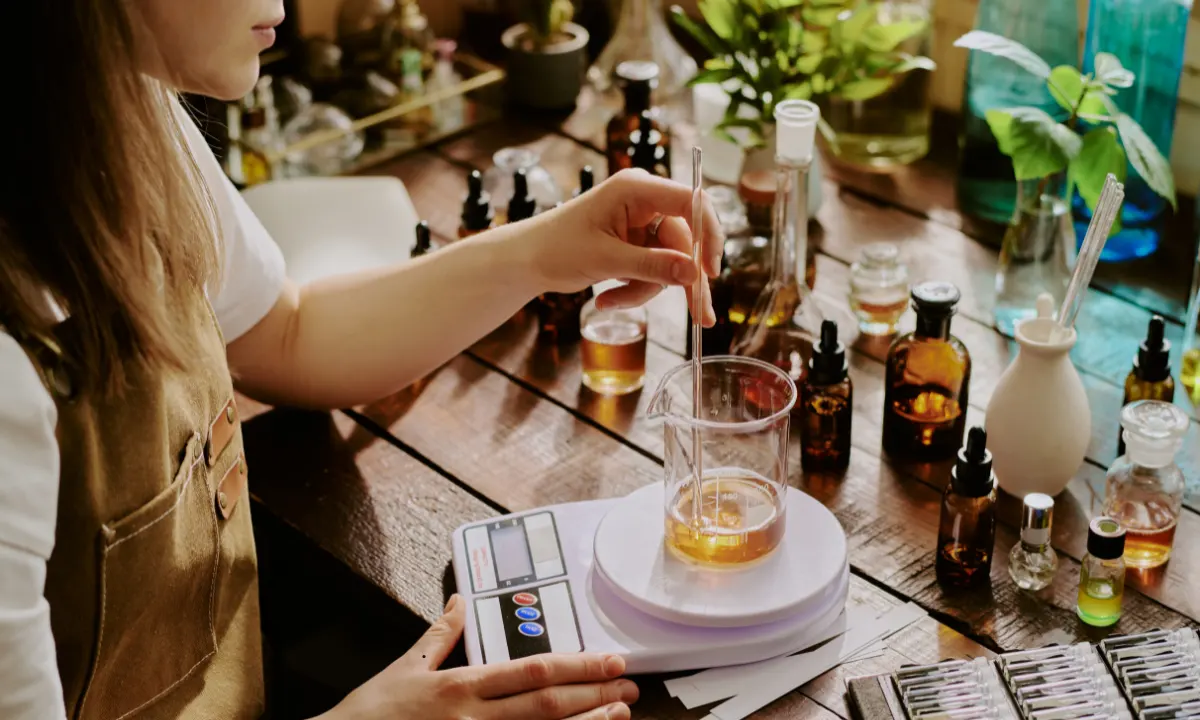
A blend can smell excellent on a fragrance strip but behave differently in a candle, diffuser, soap, body oil, or roll-on perfume. Wax products may reduce scent throw. Soap making can change scent character during cure time. Reed diffusers need good diffusion performance. Waterless diffusers need the right aroma concentration. Body care products need safe dilution and skin comfort.
Testing should include:
- Fragrance strip test
- Skin test where suitable
- Small test batch
- 48-hour resting period
- Product performance check
- Scent strength review
- Colour and stability check
- Customer feedback, where possible
This process helps sellers avoid weak blends before bulk production.
Essential Oil Blend Ratios for Perfume Making
Perfume blending needs structure. Random mixing often leads to muddy scents, sharp openings, or weak dry-downs. A simple starting point is the 30/50/20 rule, where 30% of the blend comes from top notes, 50% from middle notes, and 20% from base notes. This works well for learning fragrance proportions, but it is not a fixed law. Oud-heavy Arabian perfume oils may need more base notes, while fresh perfumes may need a brighter opening.
| Note Type | Suggested Ratio | Main Purpose |
| Top notes | 20–30% | Fresh opening and first impression |
| Middle notes | 40–50% | Main scent body and character |
| Base notes | 20–30% | Longevity, depth, and dry-down |
Common Mistakes in Luxury Perfume Oil Blending
Most poor blends fail because the seller mixes too many strong notes, ignores the base structure, or skips testing. Luxury perfume blending needs control. More notes do not always mean a better scent. A simple blend with clear balance can smell more premium than a crowded blend with no direction. Sellers should focus on scent identity, user experience, product format, and repeatability.
Using too many heavy notes
Oud, patchouli, leather, amber, musk, vetiver, clove, cinnamon, frankincense, and myrrh are powerful. If too many heavy notes are used together, the blend can feel muddy, smoky, or tiring. A better approach is to choose one main heavy note, one support note, and one softening note. For example, oud + rose + musk is clearer than oud + patchouli + leather + myrrh + amber + clove, all pushed at high strength.
Ignoring base notes
A blend without base notes may smell good for a few minutes and then disappear. This is common in blends made only with citrus, light florals, or fresh herbal notes. Base notes such as sandalwood, amber, musk, patchouli, vetiver, oud, vanilla, tonka bean, cedarwood, and frankincense give staying power. If the goal is luxury perfume oil, base notes are not optional. They are what make the scent feel finished.
Choosing weak blends for commercial products
A blend made for casual aromatherapy may not work as a commercial perfume, diffuser oil, candle fragrance, or body product. Commercial products need stronger scent performance, stable supply, and repeatable quality. Essential oils alone may not give enough consistency or cost control. This is where perfume oils and fragrance oils can help because they can offer broader scent profiles, better performance, and more reliable batch consistency.
Skipping sample testing before bulk buying
Buying bulk oil without testing is one of the fastest ways to waste money. A scent may sound good by name but fail in the final product. Sellers should test samples first, compare options, check dry-down, and run a small batch before ordering larger quantities. Bintammam’s sample-first approach is useful because it lets buyers check scent quality and product fit before committing to sor private label perfume oil production.
How Bintammam Supports Perfume Oil Buyers in Deira, Dubai
Bintammam supports perfume oil buyers in Deira, Dubai by offering wholesale perfume oils, Arabian attar oils, oud perfume oils, sample kits, and private label perfume oil options for fragrance businesses, resellers, gift shops, and online sellers. Buyers can test scent profiles such as oud rose, amber musk, sandalwood vanilla, jasmine patchouli, and saffron leather before placing bulk orders, which helps reduce dead stock, weak launches, and customer complaints. This makes Bintammam a practical supplier for businesses that want premium perfume oil blends suited to Dubai’s luxury fragrance market.
Final Thoughts
The best-smelling essential oil blends used in luxury perfumes are not random mixtures. They are built with structure, balance, and a clear sense of purpose. For Deira Dubai buyers, strong commercial directions include oud rose saffron, sandalwood vanilla amber, jasmine musk patchouli, bergamot neroli cedarwood, and frankincense myrrh oud. These blends work because they combine top notes, heart notes, and base notes in a way that feels complete.
For sellers, the smartest move is simple: do not buy bulk based on a name alone. Test the fragrance first, check the dry-down, confirm product performance, and choose blends that match your customer. Bintammam can support fragrance businesses with wholesale perfume oils, Arabian attar oils, oud perfume oils, sample kits, and private label perfume oil options for buyers who want premium scent profiles suited to Dubai’s market.